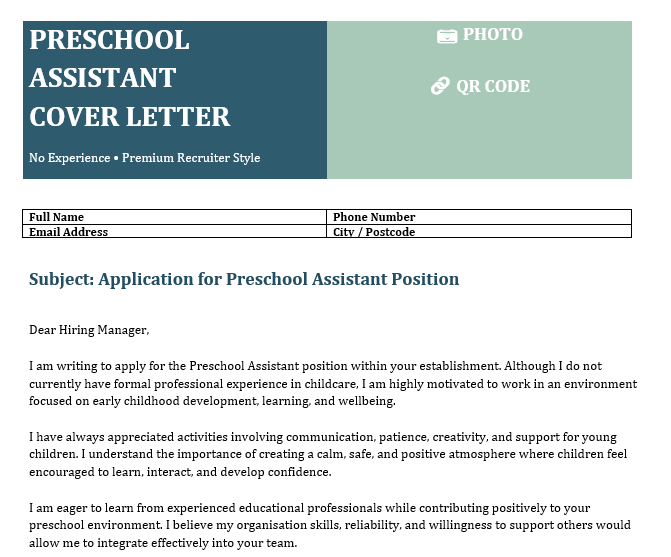
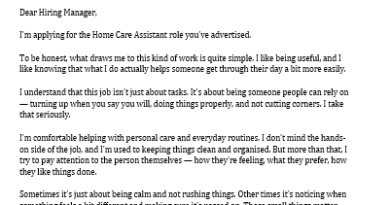
Preschool Assistant Cover Letter No Experience + Free Word Template
Starting a career in childcare can feel intimidating, especially when job descriptions seem to favour candidates with previous experience or formal qualifications. Many people interested in preschool environments genuinely enjoy working with children, although they struggle to present themselves confidently because they are entering the field for the first time.
In reality, numerous nurseries and preschool establishments understand that professional experience develops progressively. Recruiters frequently look beyond diplomas alone. They often pay close attention to personality, communication style, patience, reliability, and the ability to create a reassuring environment for young children.
A well-written preschool assistant cover letter can therefore become a major advantage, particularly for applicants without direct experience.
Why Cover Letters Matter in Preschool Recruitment
Early childhood education relies heavily on human interaction. Unlike many professions where technical knowledge dominates the recruitment process, preschool environments require emotional intelligence, attentiveness, and calm communication.
A CV may show limited experience, although the cover letter gives recruiters something equally important: a sense of who the applicant is.
In many cases, hiring managers want to understand:
Why the candidate wants to work with children
Whether the applicant appears patient and trustworthy
How they communicate
Their willingness to learn
Their attitude toward teamwork
Their understanding of childcare environments
For beginner candidates, the cover letter often becomes the most important part of the application.
Applying Without Experience Does Not Mean Applying Without Value
One of the biggest misconceptions among first-time applicants is the belief that “no experience” automatically means “nothing to offer.”
Preschool establishments regularly hire motivated individuals at the beginning of their professional journey. Many skills useful in childcare are developed naturally through personal qualities and everyday interactions.
For example:
Looking after younger siblings
Babysitting occasionally
Helping relatives with children
Volunteering
Supporting school activities
Working in customer-facing environments
Participating in community activities
All these experiences can reflect patience, communication, responsibility, and adaptability.
Recruiters often understand this distinction very well.
What Recruiters Usually Expect From a Preschool Assistant
Preschool assistants help create stable, safe, and positive learning environments for children during their earliest developmental years.
The role may involve:
Supervising activities
Helping prepare classrooms
Supporting hygiene routines
Assisting teachers
Encouraging social interaction
Maintaining calm environments
Helping children feel emotionally secure
Because of this, recruiters frequently prioritise personality and behaviour alongside qualifications.
A candidate who communicates naturally and demonstrates genuine motivation may leave a stronger impression than someone with technical experience but limited interpersonal warmth.
The Importance of Tone in a Preschool Cover Letter
One of the most common problems in childcare applications is excessive formality.
Some applicants attempt to sound overly corporate or complicated. Others copy generic internet templates that feel robotic and impersonal.
Preschool environments are different.
Professionalism matters, although warmth matters too.
A strong preschool assistant cover letter generally sounds:
Calm
Natural
Respectful
Positive
Organised
Genuine
Recruiters often respond positively to applications that feel sincere rather than artificially impressive.
How to Structure a Preschool Assistant Cover Letter Without Experience
A simple and clear structure usually works best.
1. Introduce Yourself Clearly
The opening paragraph should explain the position being applied for and establish motivation naturally.
Example:
“I am writing to apply for the Preschool Assistant position within your establishment. I am highly motivated to begin a professional journey within early childhood education and contribute positively to your learning environment.”
This type of introduction feels professional while remaining approachable.
2. Focus on Personal Strengths
Applicants without experience should highlight transferable qualities rather than apologising repeatedly for lacking qualifications.
Useful strengths include:
Patience
Organisation
Communication
Reliability
Creativity
Adaptability
Team spirit
Emotional awareness
Recruiters understand that these qualities are essential in childcare environments.
3. Show Understanding of Preschool Environments
Applications become stronger when they demonstrate awareness of children’s emotional and educational needs.
Important themes include:
Safe environments
Positive communication
Learning through play
Emotional development
Child wellbeing
Supportive learning atmospheres
Even basic understanding of these ideas can make a cover letter feel more credible.
4. End Positively
The final paragraph should remain confident and polite.
Example:
“I would welcome the opportunity to discuss my motivation and willingness to learn further during an interview.”
Simple endings often sound more authentic than exaggerated statements.
Common Mistakes Beginner Applicants Should Avoid
Many first-time applications become weaker because candidates underestimate themselves or overcompensate.
Frequent mistakes include:
Mistake
Why It Creates Problems
Apologising repeatedly for no experience
Reduces confidence
Copying generic templates word for word
Makes the application feel impersonal
Using overly complicated language
Sounds unnatural
Writing very long paragraphs
Reduces readability
Focusing only on qualifications
Ignores personality and communication
Forgetting childcare values
Makes the letter feel disconnected
A recruiter generally wants to understand whether the candidate would integrate positively into the preschool environment.
Why Human Qualities Matter So Much in Childcare
Preschool education involves far more than supervising activities.
Children at this age learn emotional behaviours, communication habits, social interaction, confidence, and self-expression through daily experiences.
Because of this, preschool staff members influence children’s development in meaningful ways.
Recruiters therefore pay attention to qualities such as:
Calm communication
Kindness
Patience
Emotional stability
Listening skills
Encouragement
Positive energy
These qualities rarely appear through certificates alone. They often become visible through writing style and communication tone.
Adapting the Cover Letter for Different Preschool Environments
Each preschool or nursery may have slightly different educational values.
For example:
Montessori environments may appreciate independence and creativity.
Private nurseries may emphasise professionalism and parent communication.
Community childcare centres may prioritise teamwork and flexibility.
Personalising the application slightly for each employer improves credibility considerably.
Even mentioning the school name and educational atmosphere can make the application feel more thoughtful.
Building Confidence as a First-Time Applicant
Many people interested in childcare hesitate before applying because they believe they are “not qualified enough.”
Yet childcare professions often begin with motivation, empathy, and willingness to learn.
Experience develops progressively.
The first application rarely needs to sound perfect. It simply needs to sound credible, respectful, and genuine.
Recruiters frequently recognise when someone genuinely wants to contribute positively to children’s wellbeing and development.
That authenticity can sometimes make a stronger impression than highly polished but impersonal applications.
Final Thoughts
Writing a preschool assistant cover letter without experience may initially feel difficult, although beginner applicants often possess many of the qualities childcare establishments genuinely value.
Patience, communication, kindness, reliability, and emotional awareness remain central to early childhood education environments.
A strong cover letter does not need complicated language or exaggerated claims. What matters most is presenting motivation clearly while showing understanding of children’s wellbeing and learning environments.
With thoughtful wording, professional structure, and a natural tone, even first-time applicants can create applications that feel convincing, warm, and recruiter-friendly.
Healthcare rarely unfolds in perfectly controlled conditions. Corridors remain active long after schedules lose their rhythm. Conversations happen quietly behind
Temperature control defines the hidden rhythm of every professional kitchen. Behind refrigerated storage, chilled preparation zones and frozen stockrooms lies