Digital Marketing Certification Simulator: Interactive Quiz for SEO, Google Ads, KPI and Marketing Analytics
Digital marketing evolves at a pace that leaves little room for approximation. Campaign performance, SEO visibility, advertising profitability, lead generation and conversion optimization now require analytical reflexes as much as creative intuition. This interactive Digital Marketing Certification Simulator was designed to reproduce that modern reality through a dynamic series of questions covering Google Ads, marketing KPIs, email marketing, ROAS, ROI, campaign analytics and performance dashboards. More than a simple quiz, this simulator offers an immersive way to evaluate strategic understanding, identify knowledge gaps and strengthen operational decision-making in contemporary digital environments.
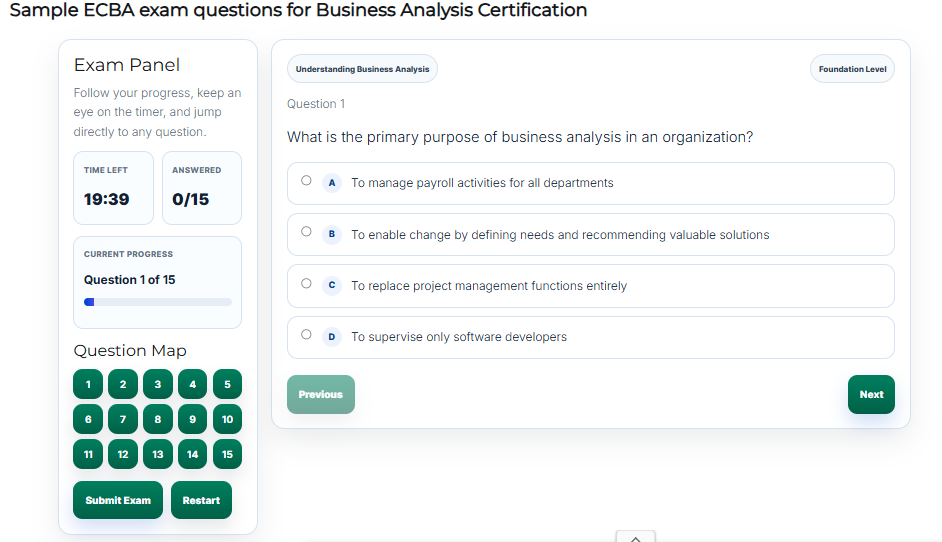
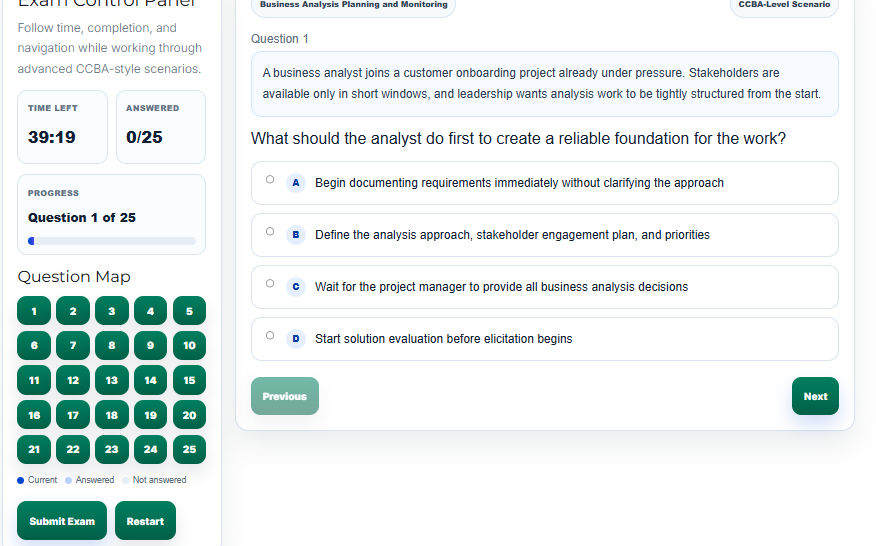
Digital Marketing Certification Quiz
Test your knowledge of digital marketing, campaign analytics, SEO, Google Ads, email marketing, conversion tracking, ROAS, KPI dashboards and marketing performance measurement.
Why Interactive Marketing Quizzes Quietly Became One of the Most Powerful Learning Formats Online
Scrolling habits changed the internet long before most educational platforms realized it.
Modern users rarely consume information linearly anymore. They jump between tabs, skim paragraphs, abandon long pages within seconds and constantly compare sources before deciding where to invest attention. Traditional educational content often struggles inside this environment because it asks readers to remain passive for too long.
Interactive quizzes changed that equation.
A digital marketing certification quiz does something remarkably effective: it transforms reading into participation. The user no longer observes information from a distance. They interact with it, challenge their memory, test assumptions and immediately receive feedback on their level of understanding.
This shift may appear simple on the surface. Its psychological impact is enormous.
The Modern Internet Rewards Participation More Than Passive Reading
People increasingly remember what they do, not merely what they read.
This explains why:
- simulations outperform static documents
- interactive exercises increase retention
- gamified systems generate recurring visits
- quizzes improve engagement duration
- score-based experiences create emotional investment
An interactive marketing quiz therefore operates simultaneously on several levels:
- educational
- cognitive
- emotional
- competitive
- analytical
The result feels lighter than traditional learning while often producing deeper memorization.
Marketing Itself Became Too Complex for Passive Learning
Digital marketing no longer belongs to a single discipline.
A modern marketer navigates:
- SEO
- Google Ads
- email automation
- social media analytics
- conversion optimization
- attribution models
- sales funnels
- campaign profitability
- behavioral data
- dashboard reporting
Learning these concepts through static theory alone often creates a dangerous illusion of understanding.
Interactive quizzes expose weaknesses instantly.
Someone may believe they understand ROAS until they confuse it with ROI. Another person may think they understand acquisition costs until confronted with a CPA calculation scenario. The quiz reveals these invisible gaps without requiring lengthy formal evaluations.
This immediate confrontation with uncertainty explains why interactive certification systems feel intellectually stimulating rather than purely academic.
A Quiz Quietly Creates Momentum
One of the most underestimated strengths of interactive simulators lies in rhythm.
Traditional articles impose a reading pace. Quizzes create movement.
Every question generates:
- anticipation
- doubt
- validation
- correction
- progression
The brain becomes naturally engaged because each step produces micro-decisions. This dynamic creates a subtle feeling of advancement that long theoretical articles often fail to maintain.
The user does not merely consume content.
They progress through it.
Digital Marketing Is One of the Most Quiz-Compatible Domains
Certain disciplines adapt exceptionally well to interactive evaluation formats. Digital marketing belongs strongly to this category because it combines:
- terminology
- strategic reasoning
- calculation logic
- platform knowledge
- performance interpretation
A single quiz may simultaneously test:
- KPI comprehension
- campaign analysis
- SEO fundamentals
- advertising logic
- audience segmentation
- funnel optimization
The format therefore feels naturally aligned with the profession itself.
Marketing is already data-driven. The quiz simply mirrors that structure.
Interactive Simulators Also Create a Different Relationship With Failure
Traditional evaluations often associate mistakes with judgment. Interactive quizzes tend to associate mistakes with exploration.
This distinction matters deeply.
When users answer questions inside a dynamic simulator:
- they experiment more freely
- they accept uncertainty more naturally
- they repeat attempts willingly
- they remain engaged longer
The environment feels closer to training than examination.
This subtle psychological safety increases learning efficiency considerably.
The Most Valuable Marketing Professionals Often Think Like Analysts
The evolution of marketing increasingly favors professionals capable of interpreting signals rather than merely producing campaigns.
A modern marketer must often understand:
- why conversion rates decline
- why acquisition costs rise
- why one audience segment outperforms another
- why a campaign generates traffic but weak revenue
Interactive quizzes reinforce this analytical reflex.
Questions built around scenarios rather than definitions train users to interpret situations rather than memorize vocabulary mechanically.
This changes the educational value entirely.
Why Gamified Learning Continues to Expand
Human beings naturally respond to progression systems.
Scores, levels, badges and rankings activate motivational mechanisms deeply rooted in cognitive behavior. This explains why gamification became increasingly present across:
- education
- fitness
- language learning
- professional certifications
- business training
Marketing quizzes integrate perfectly into this ecosystem because they combine measurable progression with practical utility.
A score immediately creates positioning:
- beginner
- intermediate
- advanced
- expert
This classification introduces a personal dimension that static reading rarely produces.
The Quiz Format Quietly Encourages Repetition
Another remarkable advantage emerges from replayability.
Very few users reread long theoretical articles multiple times voluntarily. Interactive quizzes encourage repeated attempts naturally because users want:
- better scores
- faster completion
- mastery validation
- competitive satisfaction
Each repetition strengthens retention unconsciously.
This explains why interactive educational systems often outperform passive content in long-term memorization.
Marketing Dashboards and Quizzes Share a Surprising Similarity
At first glance, dashboards and quizzes may appear unrelated. In reality, both systems revolve around feedback loops.
Dashboards tell companies:
- what works
- what weakens
- what improves
- what requires correction
Quizzes tell learners exactly the same thing about themselves.
Both systems transform invisible performance into visible signals.
This parallel explains why interactive marketing simulators feel particularly coherent within analytics-oriented environments.
The Internet Increasingly Rewards Useful Interaction
Search engines, social platforms and recommendation systems progressively prioritize content capable of generating:
- engagement duration
- return visits
- interaction depth
- meaningful participation
Interactive simulators naturally strengthen these signals because they transform visitors into active participants.
The page ceases to function as a static article. It becomes an experience.
This distinction grows increasingly important in competitive digital ecosystems where passive informational pages become easier to replace.
Curiosity Often Produces Better Learning Than Obligation
One of the quiet strengths of quiz-based learning lies in emotional neutrality.
People frequently open a marketing quiz out of curiosity rather than formal obligation. This changes the cognitive atmosphere completely.
Curiosity lowers resistance.
The learner enters the experience voluntarily:
- to test themselves
- to compare levels
- to validate intuition
- to explore weaknesses
This voluntary engagement frequently produces stronger concentration than imposed educational structures.
The Future of Professional Learning Will Likely Become Increasingly Interactive
Static educational systems are gradually giving way to:
- simulations
- adaptive quizzes
- scenario-based testing
- interactive dashboards
- AI-assisted feedback
- real-time evaluation environments
Digital marketing education appears particularly suited to this transition because the discipline itself constantly evolves.
The objective no longer consists merely of storing information.
The objective is developing adaptive reasoning.
A Good Quiz Does More Than Evaluate Knowledge
The strongest simulators quietly build confidence.
When users progress through increasingly complex marketing questions, they begin recognizing patterns:
- how campaigns behave
- how metrics interact
- how profitability emerges
- how funnels operate
- how digital ecosystems connect
This growing analytical familiarity gradually transforms uncertainty into operational intuition.
That transformation may ultimately be more valuable than the score itself.