CIM Marketing Certification Simulator: Marketing Quiz + Practice Guide
Strategic marketing rarely rewards improvisation for long. Behind every successful campaign lies a structured understanding of positioning, customer behaviour, segmentation, branding and performance analysis. The growing popularity of professional marketing certifications in the United Kingdom reflects this evolution clearly: companies increasingly value marketers capable of combining creativity with analytical reasoning and commercial coherence. This interactive CIM-style marketing simulator was designed to reproduce that intellectual environment through scenario-driven questions exploring strategic marketing, consumer insight, market positioning, campaign planning and marketing performance evaluation. More than a conventional quiz, the simulator functions as a practical immersion into the logic shaping modern marketing decision-making.
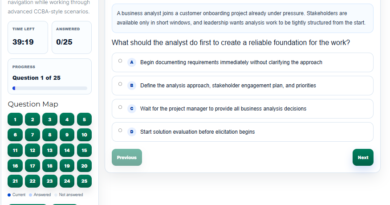
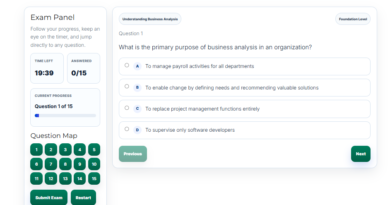
CIM Marketing Certification Quiz Simulator
This interactive simulator helps learners prepare for strategic marketing concepts commonly associated with professional marketing certification pathways in the UK. It covers marketing planning, segmentation, positioning, customer behaviour, brand strategy, digital channels, campaign evaluation and marketing performance measurement.
📘 Strategic Marketing
🎯 Segmentation
📊 Marketing Planning
🧠 Consumer Behaviour
💼 Brand Management
Marketing Knowledge Has Quietly Become a Competitive Asset
Modern markets move faster than traditional business structures were originally designed to handle.
Consumer expectations evolve continuously. Digital channels fragment attention. Competitive pressure intensifies across almost every industry. Under these conditions, marketing can no longer rely solely on intuition or visibility alone. Organizations increasingly seek professionals capable of understanding not merely how to communicate, but why certain strategies influence behaviour while others fail silently.
This transformation explains the growing importance of structured marketing education and certification pathways across the United Kingdom.
The objective is not simply to memorize frameworks. The objective is developing strategic reflexes.
The Rise of Strategic Marketing Thinking
Many younger professionals initially associate marketing with content creation, social media publishing or advertising design. These visible dimensions certainly matter, yet they represent only a fraction of the discipline itself.
Strategic marketing operates at a deeper level.
It asks questions such as:
Which customer segments generate long-term profitability?
Why do certain brands maintain pricing power?
What motivates loyalty beyond promotional incentives?
Which positioning creates differentiation inside saturated markets?
How should communication adapt across channels without losing coherence?
These questions shape business direction itself.
Marketing therefore becomes closely connected to:
psychology
economics
behavioural analysis
commercial strategy
brand perception
organizational growth
The profession evolves into a decision-making function rather than a communication department alone.
Why Interactive Simulators Change the Learning Experience
Traditional educational formats often encourage passive reading. Simulators create participation.
This distinction may appear minor at first glance. In practice, it changes cognitive engagement entirely.
Interactive quizzes force the brain to:
evaluate assumptions
compare concepts
retrieve information actively
interpret scenarios
recognize strategic patterns
Learning therefore becomes dynamic rather than observational.
The participant no longer consumes marketing theory from a distance. They interact directly with the logic underlying strategic decisions.
This explains why quiz-based systems frequently improve retention more effectively than purely theoretical content.
Marketing Is Increasingly Measured Through Decision Quality
One of the major evolutions shaping modern organizations concerns accountability.
Marketing teams are no longer evaluated exclusively through visibility metrics. Businesses increasingly examine:
profitability
acquisition quality
customer retention
revenue contribution
campaign efficiency
brand positioning strength
This shift changes the nature of required competencies.
A marketer capable of interpreting data, understanding audience psychology and aligning campaigns with business objectives often becomes significantly more valuable than someone focused solely on creative execution.
The analytical dimension of marketing continues to expand rapidly.
Segmentation Quietly Remains One of the Most Powerful Marketing Concepts
One of the most underestimated principles in strategic marketing concerns segmentation.
Many campaigns fail not because the product lacks quality, but because communication addresses audiences too broadly.
Segmentation introduces precision.
It allows organizations to understand:
behavioural differences
purchasing motivations
customer expectations
emotional triggers
decision-making patterns
The stronger the segmentation logic, the more coherent the positioning becomes.
This relationship between segmentation and positioning forms one of the central foundations of professional marketing education.
Brands Are Built Through Consistency More Than Visibility
Visibility attracts attention temporarily. Consistency builds recognition over time.
Strong brands rarely emerge from isolated campaigns alone. They develop through repeated alignment between:
visual identity
communication tone
customer experience
perceived value
strategic positioning
This coherence gradually creates familiarity. Familiarity generates trust. Trust eventually influences purchasing behaviour.
Professional marketing certifications increasingly emphasize this long-term perspective because modern consumers interact with brands across dozens of touchpoints simultaneously.
Consumer Behaviour Has Become More Complex Than Ever
The digital economy transformed customer journeys profoundly.
Consumers now:
compare multiple sources instantly
consult reviews continuously
move between devices
interact across platforms
postpone decisions repeatedly
expect personalization
Linear purchasing behaviour becomes increasingly rare.
This complexity explains why marketers increasingly rely on:
audience analytics
customer journey mapping
behavioural segmentation
funnel analysis
attribution models
Understanding customer behaviour therefore becomes less about assumptions and more about interpretation.
Marketing Performance Is Also a Matter of Strategic Alignment
One of the strongest ideas reinforced by professional marketing training concerns coherence between departments.
Marketing isolated from commercial objectives often generates:
weak lead quality
fragmented messaging
inefficient spending
inconsistent positioning
The strongest organizations align:
marketing
sales
customer experience
brand strategy
business objectives
This alignment transforms marketing into a growth engine rather than an isolated communication activity.
Why Marketing Simulators Reflect Real Business Environments
Professional simulators feel effective because they mirror real-world uncertainty.
Precision rarely fails loudly at the beginning. Industrial controllers, probes and calibration instruments usually continue operating while small deviations quietly
Preparing for the Certified Business Analysis Professional (CBAP) exam often begins with discipline. Candidates read the core material carefully, revisit