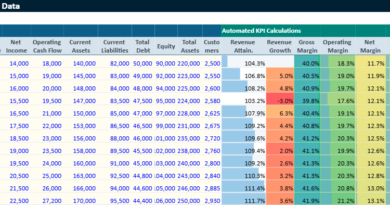
A Preventive Maintenance Dashboard Designed for Real Operational Visibility
Preventive maintenance becomes far more effective when maintenance teams can clearly visualize equipment behaviour, recurring failures, intervention duration and downtime trends inside one structured environment.
This Excel preventive maintenance dashboard helps transform scattered maintenance data into operational indicators that support faster decisions, better planning and stronger equipment reliability.
The role of the preventive maintenance manager is crucial to ensure the operational efficiency of the company and to avoid unexpected interruptions. Their mission is complex due to the diversity of their tasks. A key challenge is to implement a preventive maintenance model to minimize downtime. That is why the responsibility of the maintenance manager is even greater, given the varied nature of their job. The challenge for the maintenance manager: Improve efficiency and reduce unexpected downtimes through preventive maintenance.
Also read:
Predictive Maintenance Dashboard
6 Preventive Maintenance Plan Templates
Preventive Maintenance Plan in Excel
Simple Guide for Developing a Preventive Maintenance Plan
Maintenance Checklist: Definition, Method, Word Example
What is Preventive Maintenance?
Preventive maintenance occurs regularly or according to predefined criteria to keep equipment in good working condition. Its primary goal is to reduce the risk of breakdowns in assets, machines, and equipment. It also contributes to broader objectives within the industrial company.
Diverse industries promote the prevalence of preventive maintenance in growing factories and businesses.
IT Preventive Maintenance:
In IT, preventive maintenance covers both software and hardware, as both have a decisive influence on system performance, which in turn affects speed and agility.
For software, there are preventive maintenance programs that scan the system to detect and fix errors and leftover debris from daily use, such as invalid registry entries or missing shortcuts.
Defragmentation is also common—it reorganizes data on the hard drive so that it takes no longer than necessary to read. For hardware, preventive maintenance usually consists of cleaning the exterior and surroundings to prevent dust and dirt accumulation inside the equipment and its peripherals. Internal cleaning is typically handled by specialized technical staff.
The Role of a Maintenance Manager
The maintenance manager plays a key and cross-functional role within a company. Below is a breakdown of their responsibilities:
Managing and Anticipating the Unexpected
Even with preventive and predictive maintenance, handling unforeseen issues remains a challenge. Responsiveness is always essential.
Maintenance managers must be able to improvise and respond quickly while having tools, materials, and supplies ready to resolve issues swiftly.
Mastering the Maintenance Budget
Another challenge lies in budgeting for the maintenance department, especially managing inventory. It’s crucial to have all necessary spare parts and materials on hand to perform maintenance tasks efficiently without extending scheduled downtimes.
However, overstocking parts can waste capital and resources.
Budgeting must consider all cost types—fixed, variable, direct, or indirect—and aspects like negotiating with suppliers or investing in new tools that add value.
Team Coordination
Organizing maintenance tasks requires leadership and planning skills. The goal is to assign tasks based on each team member’s skill set, preparation, and experience.
As technical profiles vary, collaborative work is vital. The maintenance manager must enable effective communication channels among team members and departments involved in maintenance management.
Effective Time Management
A maintenance manager must juggle:
Team coordination
Task assignments
Meetings with suppliers/distributors
Answering queries and emails
Drafting work and maintenance plans
Responding to unexpected issues
Managing this workload requires fast access to information, documents, diagrams, and photos, which must be easily shareable with the team. Time management is a daily challenge.
What This Preventive Maintenance Dashboard Helps You Monitor
Equipment Downtime
Track machine stoppages and downtime evolution across operational periods.
Availability Rate
Monitor how reliably equipment remains operational for production.
Maintenance Cost
Visualize labour costs, spare-parts expenses and maintenance budgets.
Intervention Duration
Measure repair duration and identify operational bottlenecks.
Developing a Preventive Maintenance Strategy and Plan
You can develop a preventive maintenance strategy to meet regulatory inspections, carry out recurring tasks, or schedule interventions based on equipment wear and tear.
To develop a preventive maintenance plan:
Understand the key aspects and necessary tools
Know the three types of maintenance and their implementation
Summary: Corrective maintenance solves problems. Preventive maintenance aims to prevent them. Corrective maintenance occurs after equipment failure. Preventive maintenance uses regular checks to ensure equipment works correctly and detects any issues before failure.
Planning Preventive Maintenance
Before creating a preventive maintenance strategy, understand the proactive approach involving four key action elements: Inspection, Detection, Correction, Prevention
1. Inspection:
Inspections are vital and serve two main purposes:
Ensuring safe use of equipment and reducing workplace injuries
Protecting machines by ensuring they function as intended
2. Detection:
A run-to-failure approach is costly. Preventive maintenance helps detect problems early, making them easier and cheaper to fix.
3. Correction:
Maintenance staff can proactively resolve detected issues before they worsen or cause disruptions.
4. Prevention:
Combining inspection records and notes allows learning from past mistakes and preventing recurring issues. Preventing asset failure reduces stress and increases team productivity. When equipment works as expected, the team can focus on proactive (not reactive) tasks.
Benefits of Preventive Maintenance
Preventive maintenance helps anticipate failures and avoid unplanned downtimes. Its benefits include:
Extending equipment lifespan
Reducing downtime
Ensuring service quality
Saving resources
When designing a preventive maintenance plan, it’s essential to consider your specific facilities and equipment. Relying solely on corrective maintenance can jeopardize operations due to prolonged downtime or compromised quality during emergencies.
Elements of a Preventive Maintenance Dashboard
The maintenance checklist in Excel is a detailed listing of all procedures to be carried out as part of the preventive maintenance plan in the spreadsheet software. Such a list is employed to ensure continuous observation of crucial metrics. The amount of time necessary for repairs, the percentage of scheduled upkeep, and the typical periods between failures are closely tracked.
What Are the Principal Indicators of Maintenance?
There are several potential methods for constructing a preventive maintenance dashboard in Excel. Considered fundamental signals utilized by industry specialists are: the portion of time devoted to planned servicing versus unexpected repairs, a measurement of equipment productivity accounting for quality, performance, and availability, the common time expected to mend repairable parts including fixing, testing and return to regular operation, and the anticipated period between one malfunction and the subsequent during regular function. Compliance with scheduled preventive maintenance tasks completed within a given timeframe is another potential metric.
It is also feasible—as with many things—to access ready-made templates for managing care plans, particularly preventive upkeep. This solution suits many project administrators responsible for scheduling and planning maintenance. The finest choice in this scenario involves using Excel Macros, permitting access to the most appropriate templates. These tools allow automated oversight of all assets, clear records of variables in the plans, and control of servicing for each piece of equipment, among other benefits.
Practical Industrial Example
A packaging machine inside a production facility begins failing several times each month. Initially, each interruption lasts only twenty minutes. Over time, repair duration gradually increases, spare-parts expenses become more frequent and technicians start spending more operational hours on emergency interventions.
The preventive maintenance dashboard helps reveal these recurring patterns through downtime trends, intervention history and maintenance KPI monitoring.
Preventive Maintenance Dashboard
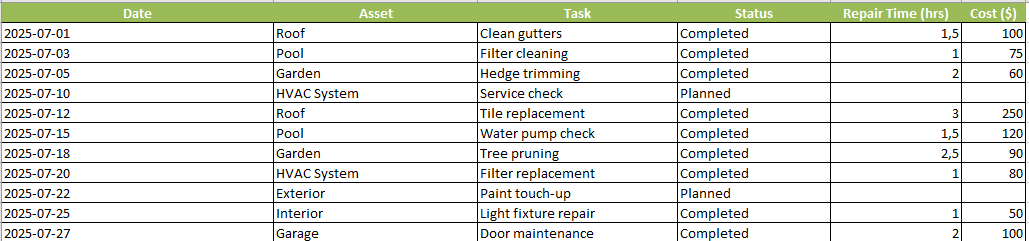
Task List – Preventive Maintenance Dashboard (Example)
Application:
Here is an example with figures to illustrate these preventive maintenance indicators:
Let’s say that in a factory, during a given month, maintenance activities were tracked and measured as follows:
Example: Preventive Maintenance Indicators with Data
Let’s consider a factory scenario where maintenance activities were measured over the course of one month. The key indicators are as follows:
Total Planned Maintenance Time: 120 hours
Total Unplanned Maintenance Time: 30 hours
Overall Equipment Effectiveness (OEE): 85% → Indicates the equipment was operational for 85% of the month. The remaining 15% represents downtime for maintenance.
Mean Time to Repair (MTTR): 2 hours → On average, it takes 2 hours to complete repairs during maintenance activities.
Mean Time Between Failures (MTBF): 200 hours → On average, 200 hours pass between two equipment breakdowns during regular operation.
Preventive Maintenance Compliance (PMC): 90% → 90% of all scheduled preventive maintenance tasks were completed on time.
These figures provide an overview of preventive maintenance performance in the factory for the month in question. They help measure maintenance effectiveness and identify potential areas for improvement.
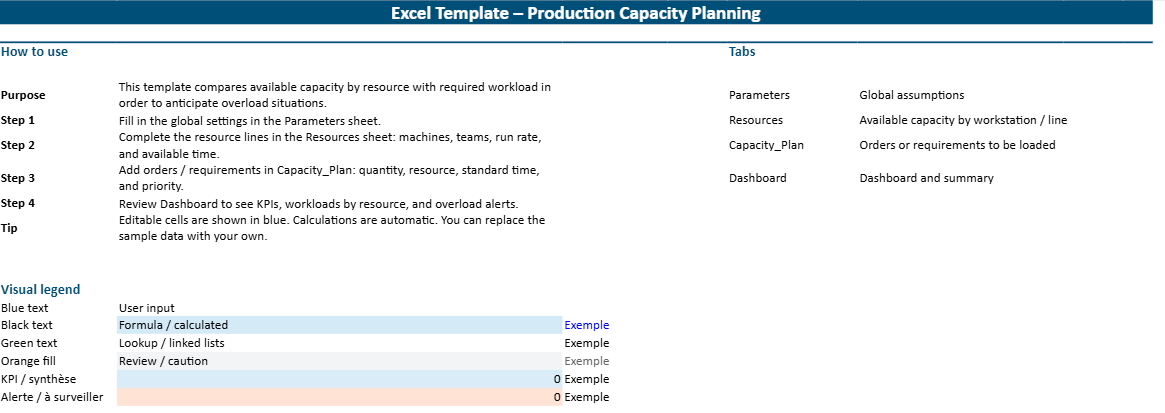
Preventive Maintenance Dashboard – Basic Template
A Preventive Maintenance Dashboard in Excel enables managers to track key indicators that reflect maintenance effectiveness. The dashboard shows current values versus target benchmarks for metrics such as:
Planned maintenance completion percentage
Overall equipment uptime
Regular updates using data from maintenance reports allow teams to evaluate work quality and identify issues that need attention.
While the summary provides a concise overview, deeper analysis is essential. Reviewing trends in indicators like Mean Time Between Failures (MTBF) and Mean Time To Repair (MTTR) across multiple periods reveals how the maintenance plan is performing. Comparing current data with past results highlights strengths and areas for improvement. A preventive maintenance checklist supports continuous, proactive efforts aligned with production goals.
Practical Example: Preventive Maintenance Plan for Vacation Rentals
Creating a preventive maintenance plan for vacation rental properties involves a methodical combination of routine inspections and long-term planning. This ensures high guest satisfaction and keeps facilities in optimal condition.
Avg. Cost per Asset: =SUM(CostRange) / COUNTA(AssetRange)
Helpful functions: SUMIFS, AVERAGEIFS, COUNTIFS
Step 4: Enable Auto-Updates
Use Excel Tables for dynamic data expansion
Add VBA Macros for importing data or sending alerts
Step 5: Build a Summary Sheet
Include bar charts, pie charts, and status dashboards
Create interactive filters using pivot tables or slicers
Step 6: Best Practices
Data Validation: Control date, cost, and status entries
Sheet Protection: Lock formulas and formats to avoid accidental changes
Advanced KPIs to Track
KPI
Formula
Purpose
Equipment Reliability Rate
(Uptime Periods / Total Observation Periods) × 100
How often equipment operates without issues
MTBF
Total Operating Time / Number of Failures
Avg. time between equipment failures
MTTR
Total Repair Time / Number of Repairs
Avg. time taken to fix equipment
Availability Rate
(MTBF / (MTBF + MTTR)) × 100
% time equipment is available and operational
Charts and Visual Dashboard
Line Charts: Visualize MTBF and MTTR trends over time
Bar Graphs: Track cost per asset or task completion rate
Pie Charts: Show distribution of task statuses (e.g., planned vs completed)
Dynamic Dashboard: Combine visuals in a summary sheet for live tracking
Essential Preventive Maintenance KPIs
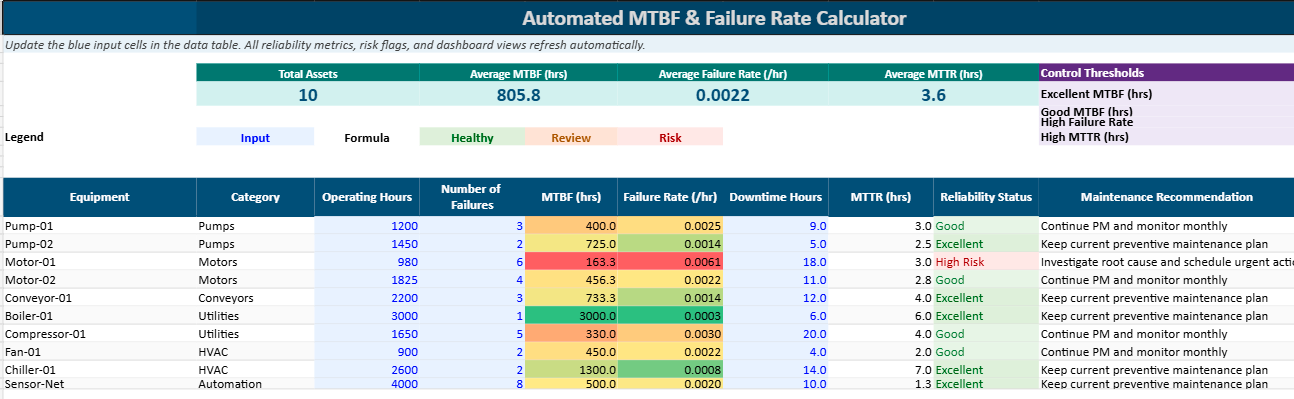
MTBF
Measures average operating time between failures.
MTBF = Operating Time ÷ Number of Failures
MTTR
Measures average repair duration after breakdowns.
MTTR = Repair Time ÷ Number of Failures
Availability Rate
Evaluates operational equipment readiness.
Availability = Operating Time ÷ Total Available Time × 100
Preventive Maintenance Dashboard in Excel – Example
🔧 Core Purpose
To track, analyze, and visualize maintenance activities through key performance indicators (KPIs), real-time user data, and auto-updated charts — empowering proactive asset management.
🗂️ Included Worksheets
1. User Data Entry
A structured form for logging maintenance activity
Fields: Date, Asset, Task, Status, Repair Time (hrs), Cost ($)
Color-coded header row for ease of use
Pre-filled with realistic data (e.g., Pool filter cleaning, Roof tile replacement)
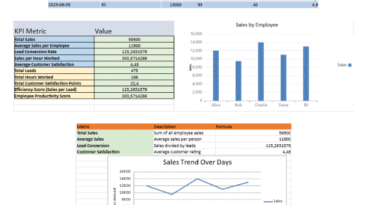
A preventive maintenance dashboard centralizes maintenance indicators such as downtime, availability, MTBF, maintenance costs and intervention history inside one visual monitoring environment.
Can Excel be used for preventive maintenance management?
Excel remains widely used for preventive maintenance because it allows maintenance teams to organize interventions, monitor KPIs and generate maintenance reports without requiring complex CMMS deployment.
Which KPIs are important in maintenance dashboards?
Important maintenance KPIs include MTBF, MTTR, availability rate, downtime hours, intervention duration, maintenance cost and preventive maintenance compliance.